Authorized Nexx Dealer
Free Shipping
Rider Owned
Easy Returns
Helmet Sizing Help
Explore the Adventure Hub



Adventure Helmets vs. Dual Sport Helmets: Is There Really a Difference?
If you've been shopping for a new motorcycle helmet, you've probably noticed manufacturers and riders use the terms adventure helmet and dual sport helmet almost interchangeably. That naturally raises the question: Are adventure helmets and dual sport helmets actually different, or are they simply two names for the same thing?
The short answer is they're essentially the same category of helmet.
Both are designed for riders who split their time between pavement and dirt, combining features from traditional full-face street helmets and off-road motocross helmets. The confusion comes from how riders use the terminology. While there's no official definition separating the two, "dual sport helmet" often implies a rider who spends more time off-road, whereas "adventure helmet" usually suggests a greater emphasis on long-distance touring with occasional dirt roads.
Understanding that subtle distinction can help you choose the right helmet—not because the labels are different, but because your riding style is.
Adventure Helmet or Dual Sport Helmet: Why the Two Names?
The term dual sport has been around much longer than adventure riding. Originally, dual sport motorcycles were lightweight machines designed to legally ride on both public roads and dirt trails. Riders needed helmets that could comfortably handle both environments.
As motorcycles like the BMW GS, Honda Africa Twin, Yamaha Ténéré, KTM Adventure, and Suzuki V-Strom became increasingly popular, manufacturers began marketing equipment specifically toward long-distance mixed-surface travel. The phrase adventure helmet became the preferred marketing term for many brands.
Today, however, most manufacturers classify the same helmets as both adventure and dual sport helmets depending on where they're marketed.
In other words, don't let the name fool you—they're usually describing the same type of helmet.
The Difference Isn't the Helmet—It's Often the Rider
When experienced riders talk about these helmets, they're usually describing riding styles more than products.
Many riders picture an adventure rider covering hundreds of highway miles before reaching scenic gravel roads, forest service routes, or remote campsites. Comfort, weather protection, low wind noise, and touring convenience become priorities.
A dual sport rider, on the other hand, often spends more time on dirt roads, rocky trails, jeep roads, and technical terrain. They may prioritize lighter weight, aggressive ventilation, and better compatibility with off-road goggles.
Neither definition is right or wrong. They're simply common ways riders describe how they use similar equipment.
What Makes an Adventure or Dual Sport Helmet Different From a Full-Face Helmet?
One question many new riders ask is whether they should buy a traditional full-face street helmet or an adventure helmet.
A standard street helmet is optimized for pavement. They're usually quieter at highway speeds, highly aerodynamic, and built for maximum comfort during long highway rides.
Adventure helmets make a few compromises to improve off-road versatility.
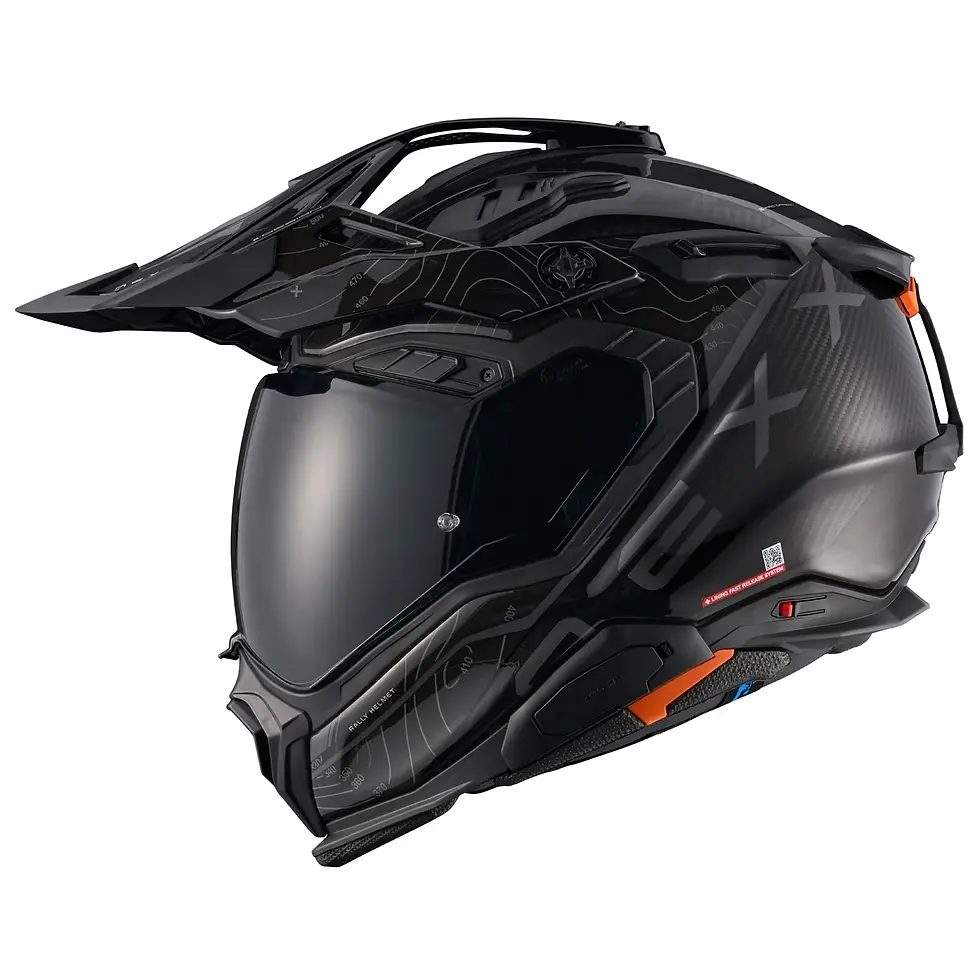
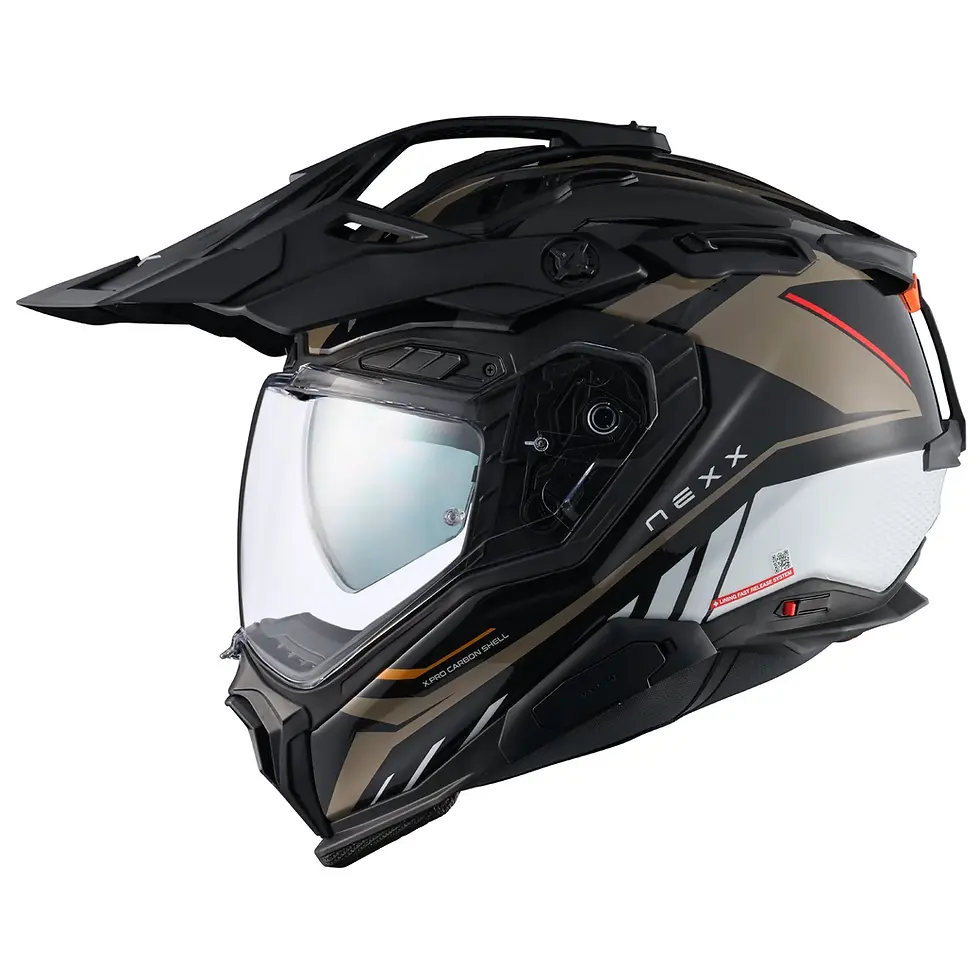
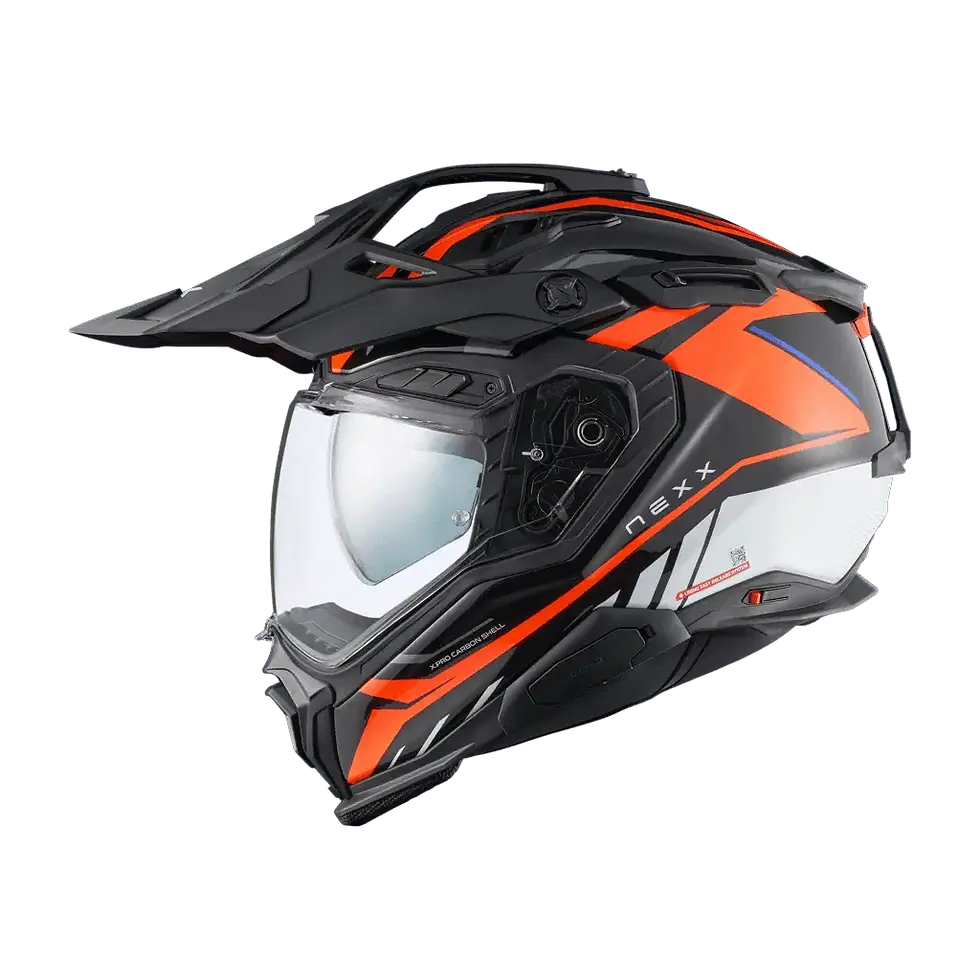
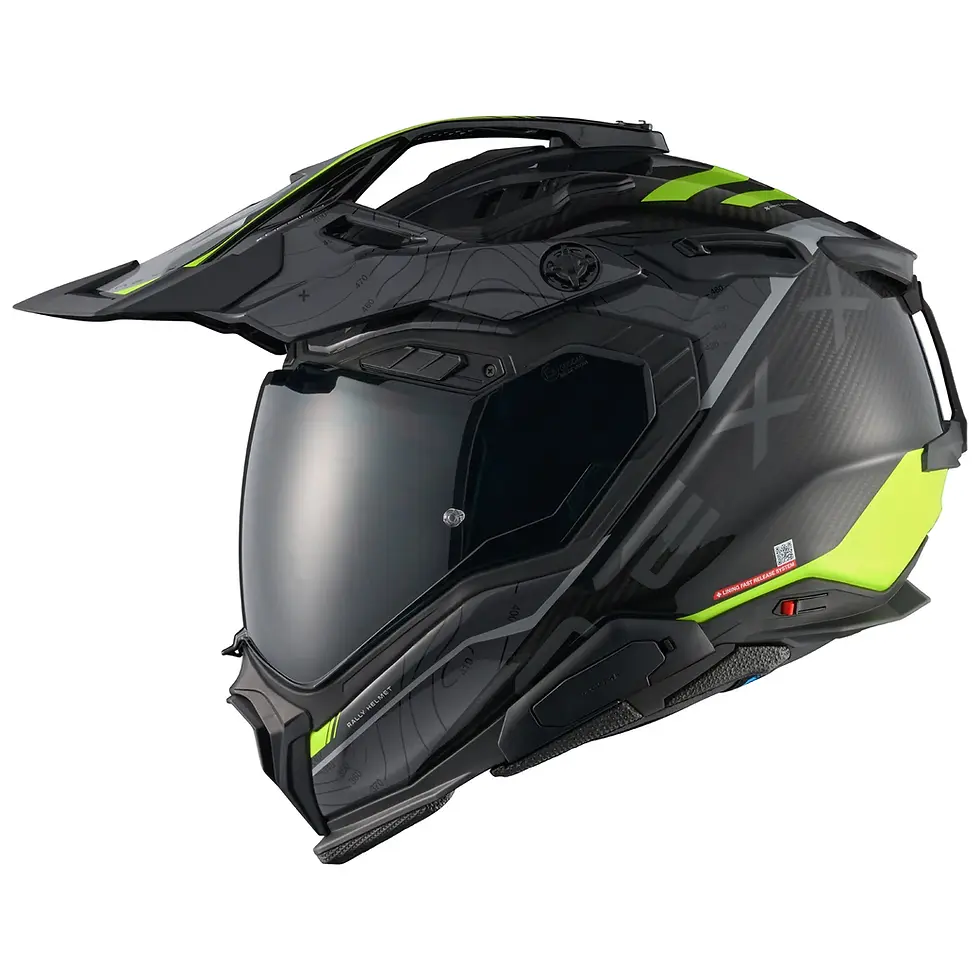
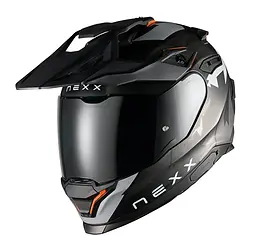
Peak Visor
The large peak visor is the feature most people immediately notice.
It helps block low-angle sunlight while riding east in the morning or west in the evening. It also provides some protection from tree branches, mud, roost, and debris when riding off-road.
Modern premium adventure helmets are carefully engineered so the peak remains stable at highway speeds, reducing lift compared to older designs.
Larger Eye Port
Unlike many street helmets, adventure helmets typically feature a much larger eye opening.
That wide field of view improves visibility both on the road and while navigating technical terrain. It also allows riders to wear motocross goggles if conditions become dusty or muddy.
For riders who regularly alternate between pavement and dirt, this flexibility is one of the biggest advantages over a traditional full-face helmet.
Face Shield
Unlike motocross helmets, adventure helmets include a full face shield.
This provides excellent weather protection during cold mornings, rain, insects, and highway riding while still allowing riders to raise or remove the shield when conditions call for goggles.
It's one of the reasons adventure helmets have become so popular with riders who enjoy exploring every type of road.
Better Ventilation
Off-road riding is physically demanding.
Standing on the pegs, navigating technical terrain, and riding at slower speeds generates much more body heat than cruising down the interstate.
Adventure helmets generally feature larger chin vents, forehead vents, and rear exhaust ports to improve airflow when you're working harder on the motorcycle.
Adventure Helmets vs. Dual Sport Helmets for Highway Riding
Some riders worry that an adventure helmet won't perform well on the highway.
Fortunately, modern designs have improved dramatically.
Premium adventure helmets now offer:
-
Excellent highway stability
-
Reduced wind buffeting
-
Improved noise control
-
Comfortable touring liners
-
Efficient ventilation
-
Integrated sun visors on many models
If your riding consists of 80 percent pavement and 20 percent gravel, an adventure helmet remains an excellent choice.
When a More Dirt-Focused Helmet Makes Sense
Although adventure and dual sport helmets are essentially the same category, some models lean further toward off-road riding.
These helmets often prioritize:
-
Lower overall weight
-
Larger ventilation openings
-
Better airflow at slower speeds
-
Easier goggle compatibility
-
Simpler interiors for dusty environments
If you're riding challenging trails every weekend, these characteristics may be more valuable than the quietest possible highway experience.
Safety Is More Important Than Marketing
Regardless of whether a helmet is marketed as an adventure helmet or dual sport helmet, safety should remain your first priority.
Look for helmets certified to modern standards such as:
-
ECE 22.06
-
DOT FMVSS 218
Many premium helmets carry both certifications, providing riders confidence whether they're commuting to work or riding deep into the backcountry.
A properly fitted helmet with current safety certifications will always provide more protection than simply choosing one because it's labeled "adventure" or "dual sport."
Choosing the Right Adventure Helmet
Instead of focusing on the product category, ask yourself a few practical questions.
How much pavement do you ride?
If most of your riding is highway touring with occasional gravel roads, prioritize comfort, wind noise, weather sealing, and visor stability.
How much dirt do you ride?
If your weekends involve rocky climbs, forest roads, or long days standing on the pegs, prioritize lighter weight, aggressive ventilation, and excellent airflow.
Do you wear goggles?
If you frequently ride in dusty conditions, choose a helmet with a large eye port and good goggle compatibility.
Do you ride in different weather?
A quality face shield, effective ventilation, and optional Pinlock anti-fog inserts become extremely valuable when riding through changing elevations and temperatures.
Don't Overthink the Name
The motorcycle industry loves creating new marketing terms.
Adventure helmet.
ADV helmet.
Dual sport helmet.
Dual-purpose helmet.
For the average rider, they're all describing essentially the same style of helmet: one capable of handling both pavement and dirt while offering more versatility than either a dedicated street helmet or a motocross helmet alone.
The differences between individual helmet models are usually far more important than the wording printed on the box.
Final Thoughts
Adventure helmets and dual sport helmets aren't competing categories—they're simply different ways of describing the same type of motorcycle helmet.
The term dual sport helmet often suggests a rider who spends more time off-road, while adventure helmet usually brings to mind longer-distance touring with gravel roads and backcountry exploration mixed into the journey. But those are riding styles, not strict equipment classifications.
Instead of worrying about the terminology, focus on choosing a helmet that matches where and how you ride. Consider factors like weight, ventilation, noise, field of view, safety certifications, visor design, and long-distance comfort.
If you're still deciding which model is right for your riding style, be sure to read our Best Adventure Helmets of 2026 buyer's guide, where we compare today's top adventure and dual sport helmets side by side to help you find the best option for your next ride.