Authorized Nexx Dealer
Free Shipping
Rider Owned
Easy Returns
Helmet Sizing Help
Explore the Adventure Hub

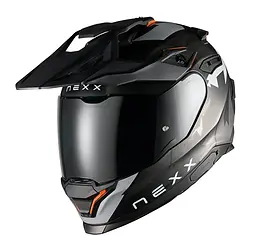


DOT vs. ECE Helmet Certifications: What's the Difference?
When shopping for a new motorcycle helmet, you'll often see labels such as DOT FMVSS 218 and ECE 22.06. While both certifications are designed to improve rider safety, they follow different testing procedures and approval processes. Understanding those differences can help you choose a helmet with confidence.
For many riders in the United States, the best option is a helmet that carries both DOT and ECE certifications, offering legal compliance in the U.S. while also meeting one of the world's most modern helmet testing standards.
What Is DOT Certification?
DOT stands for the United States Department of Transportation. Motorcycle helmets sold for road use in the United States must comply with Federal Motor Vehicle Safety Standard (FMVSS) 218.
DOT certification evaluates several important aspects of a helmet, including:
-
Impact energy management
-
Penetration resistance
-
Retention strap strength
-
Peripheral vision requirements
Unlike some international standards, DOT uses a manufacturer self-certification system. Helmet manufacturers are responsible for ensuring their products meet FMVSS 218 before they are sold. Government agencies can later purchase helmets from retailers and test them to verify compliance. If a helmet fails, manufacturers may face recalls, fines, or other enforcement actions.
For riders in the United States, DOT certification is often a legal requirement for street use.
What Is ECE Certification?
ECE stands for the Economic Commission for Europe, and its current motorcycle helmet standard is ECE 22.06.
Unlike DOT, ECE certification requires helmets to undergo independent laboratory testing before they can be approved for sale in markets that recognize the standard.
ECE 22.06 evaluates helmets under a broader range of impact scenarios, including:
-
Multiple impact speeds
-
Different impact locations
-
Rotational (oblique) impacts
-
Visor performance
-
Modular helmet functionality
-
Helmet accessories, such as integrated communication systems
Rather than testing only a few fixed locations, ECE 22.06 allows impacts across numerous points on the helmet shell, creating a more comprehensive evaluation.
DOT vs. ECE: The Biggest Differences
Although both standards are designed to improve rider safety, they differ in several important ways.
Certification Process
DOT relies primarily on manufacturer self-certification, while ECE helmets must pass independent laboratory testing before reaching consumers. This means ECE approval involves third-party verification prior to sale.
Impact Testing
Both standards evaluate a helmet's ability to absorb impact energy, but ECE 22.06 expands testing by using multiple impact speeds and additional impact locations to better represent real-world crashes.
Rotational Impact
One of the most significant additions to ECE 22.06 is rotational impact testing. Motorcycle crashes often involve angled impacts rather than perfectly straight collisions. ECE measures how helmets perform during these oblique impacts because rotational forces can contribute to serious brain injuries.
Modern Testing Standards
DOT remains an important certification for riders in the United States, but ECE 22.06 reflects more recent helmet safety research by expanding the range of testing conditions and helmet configurations.
Is ECE Safer Than DOT?
Many riders consider ECE 22.06 to be the more comprehensive certification because it evaluates helmets under a wider variety of conditions and requires independent testing before approval. However, that does not mean every ECE-certified helmet is automatically safer than every DOT-certified helmet.
Helmet safety depends on many factors, including:
-
Shell construction
-
EPS liner design
-
Fit
-
Proper sizing
-
Build quality
-
Manufacturer engineering
A properly fitting, high-quality DOT-certified helmet from a reputable manufacturer can provide excellent protection. Likewise, an ECE-certified helmet only performs as intended if it fits the rider correctly.
Should You Buy a Helmet with Both Certifications?
For many riders, the answer is yes.
A helmet carrying both DOT FMVSS 218 and ECE 22.06 has been designed to satisfy both U.S. legal requirements and the more extensive ECE testing protocol.
Many premium manufacturers, including NEXX, produce helmets with dual certification, giving riders confidence whether they're commuting, touring, or exploring off-road.
Final Thoughts
DOT and ECE certifications share the same goal: reducing the risk of head injuries during a crash. The primary difference lies in how each standard evaluates helmets.
DOT certification is required for street-legal motorcycle helmets sold in the United States and establishes minimum federal safety requirements. ECE 22.06 builds upon that foundation with independent pre-market testing, additional impact scenarios, and modern evaluation methods that include rotational impacts and a wider range of helmet designs.
For riders shopping today, a helmet certified to both DOT FMVSS 218 and ECE 22.06 offers the advantages of meeting U.S. legal requirements while also complying with one of the most current internationally recognized motorcycle helmet safety standards.